
Programs
Black Business Prayer Breakfast
The initial goal of the BBPB is to introduce African American business owners to wealth-building best practices. The longer-term objective is to enable black business owners to build collaborative networks that will enhance their resourcefulness and resilience, allowing them to build larger and more influential enterprises. The Institute sponsored its first Black Business Prayer Breakfast in August 2016 to commemorate National Black Business Month. The event included African American business leaders from the communications, health care, transportation and hospitality industries. The Institute recognized Dr. Stuart Hamilton, founder of Eau Claire Cooperative Health Centers, as businessperson of the year. With more than 20 clinics in Columbia, SC, Eau Claire serves more than 200,000 previously underserved clients annually.
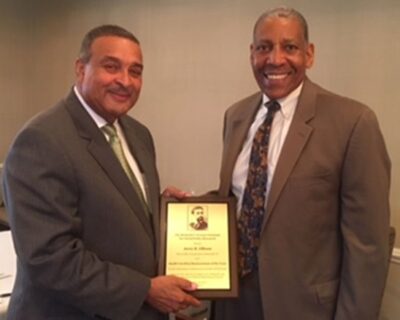
Above, Institute President, Dr. Bruce Cole, (right) presents Jerry Ellison, president of JBE, Inc., with Businessman of the Year Award during Black Business Month celebration.
UrbanPlan Workshops
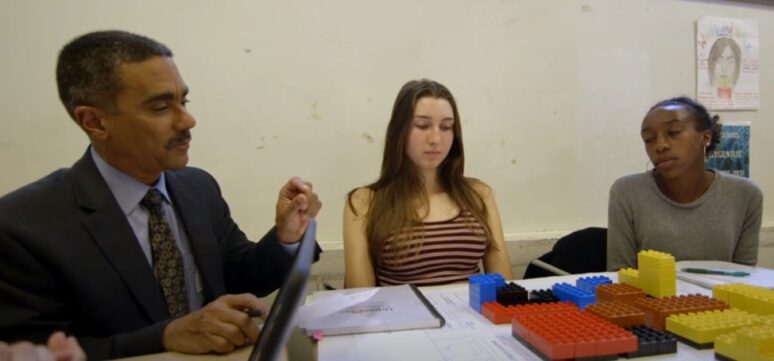
We are partnering with the Urban Land Institute, North Carolina State University to offer UrbanPlan workshops as a learning platform for Black high school and college students to learn about real estate development and civic engagement. UrbanPlan is a realistic, engaging exercise in which participants—high school students, university students, or public officials—learn the fundamental forces that affect development in our communities. Participants experience challenging issues, private and public sector roles, complex trade-offs, and fundamental economics in play when proposing realistic land use solutions to vexing growth challenges.
The Regenerative Development of Formerly Segregated Schools
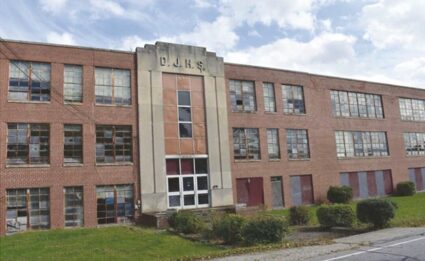
This project will be a collaboration with North Carolina Central University (Durham, NC), Vines & Associates (Raleigh, NC) and the Brookland-Lakeview Empowerment Center (Columbia, SC). Our research will include:
(1) the development of a set of best practices for the adaptive reuse of formerly segregated schools from observing the results of completed projects,
(2) Create a model that reflects the most effective use of Tax Credits (e.g., New Market, Historic, etc.) private equity, and government programs to fund a mixed-use development anchored by affordable housing; and
(3) Build a database of former equalization schools in the U.S. South to facilitate future regional redevelopment.