
More on Richard T. Greener
Richard Theodore Greener was a major thought leader and social innovator in the movement for African American civil rights during and after the Reconstruction period of U.S. history. His experiences at two institutions of higher education, Harvard College, in Cambridge, Massachusetts and the University of South Carolina, in Columbia, South Carolina, were critical in shaping Greener’s world view.
Richard T. Greener was the first African American to graduate from Harvard University in 1870. The context for his positions on domestic and foreign affairs were based on the ideals and values influenced by his Harvard education. While Greener completed his college preparatory studies at Oberlin College and Phillips Andover Academy, he perfected his oratory and writing skills at Harvard. He won the Lee Prize for reading his freshman year in 1865, the Bowdoin Prize for elocution as a sophomore and a second Bowdoin Prize for best senior thesis in 1870.
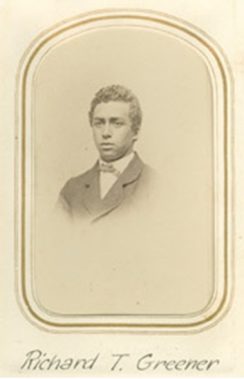
Greener’s official Andover picture, Richard Theodore Greener in 1865 as a 20-year-old senior at Phillips Academy, Andover. Courtesy, Philips Andover Academy
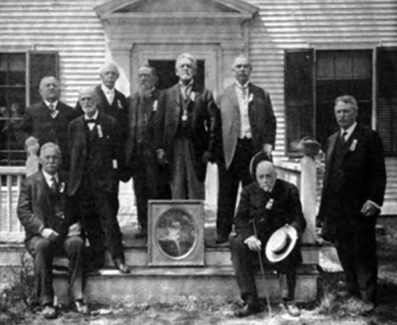
Richard T. Greener, 1915, Phillips Academy, Andover, MA. Greener, center, stands with fellow members of Andover’s Class of 1865. The men had gathered at the school for their 50th reunion. Greener was one of the day’s keynote speakers. Courtesy, Philips Andover Academy.
Greener made significant contacts while at Harvard. His meeting of U.S. Senator Charles Sumner, also a Harvard graduate, and President Ulysses S. Grant during their visits to campus proved fortuitous for Greener’s professional career. In addition, through his extra-curricular activities (e.g., editor of the Harvard Advocate) he developed relationships with Frederick Douglass, and students from the world’s most powerful families.
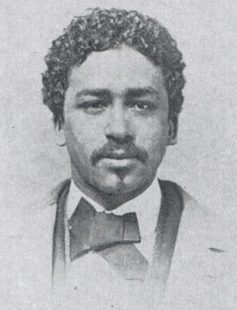
His experience as an undergraduate at Harvard College exposed him to a set of values and a social ideal that guided him during his lifetime. The principles of self-determination, social contribution, meritocracy and intellectual excellence that Harvard engrains in its undergraduates are reflected in Greener’s writings, speeches and community activities. He gave more than 65 public speeches and wrote 24 published papers in his lifetime. Because of his friendships and early interactions with W.E.B. Du Bois and Booker T. Washington, the most powerful voices in the black progressive movement of the late 19th century, these ideals were imbued in the values of the post-Reconstruction civil rights movements.
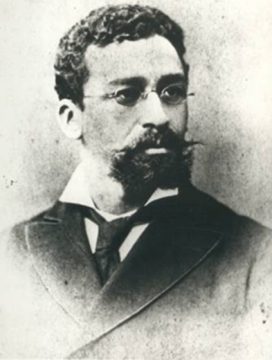
Greener accepted a professorship at the University of South Carolina in October 1873, where he became the university’s first African American faculty member. He went on to serve as the university’s first Dean of Libraries, helping to reorganize and catalog the library’s holdings which were in disarray after the Civil War. He graduated from USC’s law school and was admitted into practice before the South Carolina Supreme Court on December 20, 1876. During his tenure at USC, Greener enjoyed a measure of equality that most members of his race would never experience. His experience as a professor at the University of South Carolina shaped his views on social justice and the value of equal access to education.
When USC was closed to African Americans in 1877 by recently elected Governor Wade Hampton III, Greener moved to Washington, D.C., where he was admitted to the bar on April 14, 1877. He subsequently took a position as a professor in the Howard University Law School and served as dean there from 1878 to 1880. Later in life, he served as a U.S. diplomat in Vladivostok, Russia, as secretary of the Ulysses S. Grant Memorial Commission in New York City and worked in private law practice. Greener was born Jan. 30, 1844, in Philadelphia, PA, and died in 1922 in Chicago, IL.